

Is traditional QA dying?
At Voidr, we achieved 15,000 test cases executed daily with a team of just 6 people. This performance is the result of an AI-Augmented strategy, which allows us to implement automated tests – covering functional, load, synthetic, security, and data approaches – in an agile and efficient way.
For tech managers, this scenario indicates a structural change: a single AI-powered SDET can replace a traditional QA team, optimizing resources and accelerating deliveries.
Our vision is as follows:
Traditional QA professionals are evolving, not disappearing. Today, they focus on:
→ Executing high-value manual tests (focus on business rules and new features) → Performing critical analysis of complex scenarios and troubleshooting → Collaborating closely with developers and product managers → Ensuring quality in strategic development phases
The evolution: SDETs
In parallel, SDETs (Software Developer Engineers in Test) emerge as the natural evolution of QA, combining development skills and quality expertise to:
→ Automate processes with AI support → Integrate and deliver continuously (CI/CD) → Design robust architectures and implement proactive monitoring → Perform predictive analysis to anticipate and mitigate failures
The impact of transformation
This transformation, driven by AI, enables the formation of leaner and more efficient teams, with shorter development cycles and improved quality control.
How is your organization adapting to this new scenario?
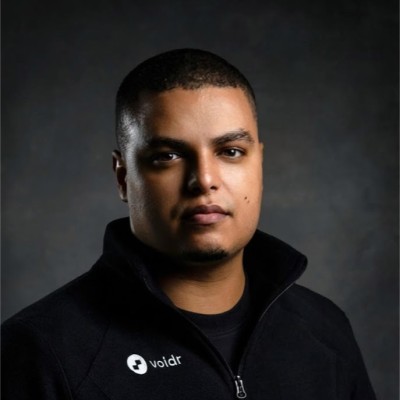
Milson is CEO & Co-founder at Voidr, where he leads quality and test automation initiatives for mission-critical systems.
Follow on LinkedIn